
What a general contractor does on your project
A general contractor holds the contract with you, pulls the permits, schedules the inspections and coordinates every trade on the job. On a single-material repair, that coordination may not matter much. On a project where a driveway, pool deck, patio, turf and pergola all meet, it’s most of the job: subgrades, drainage and finished elevations have to agree, and one trade finishing out of order can force rework.
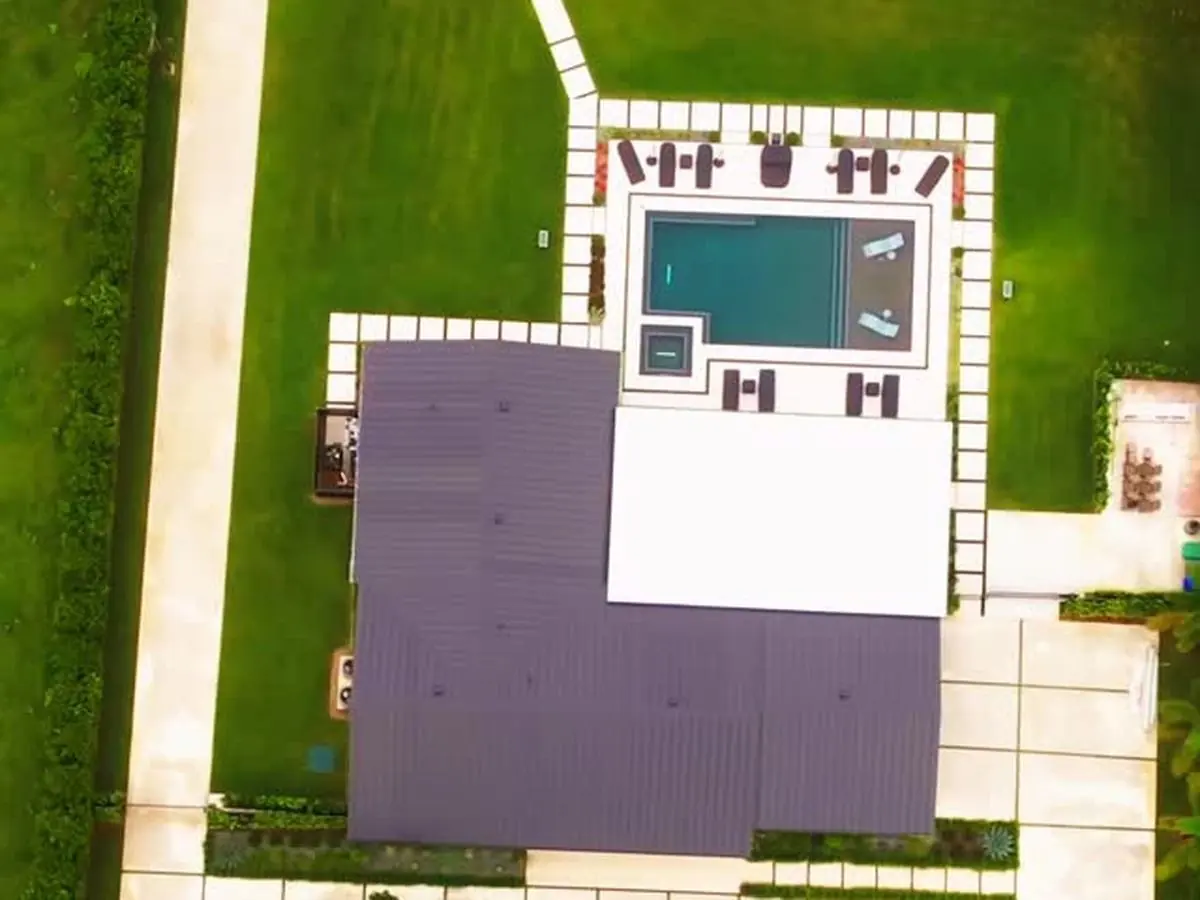
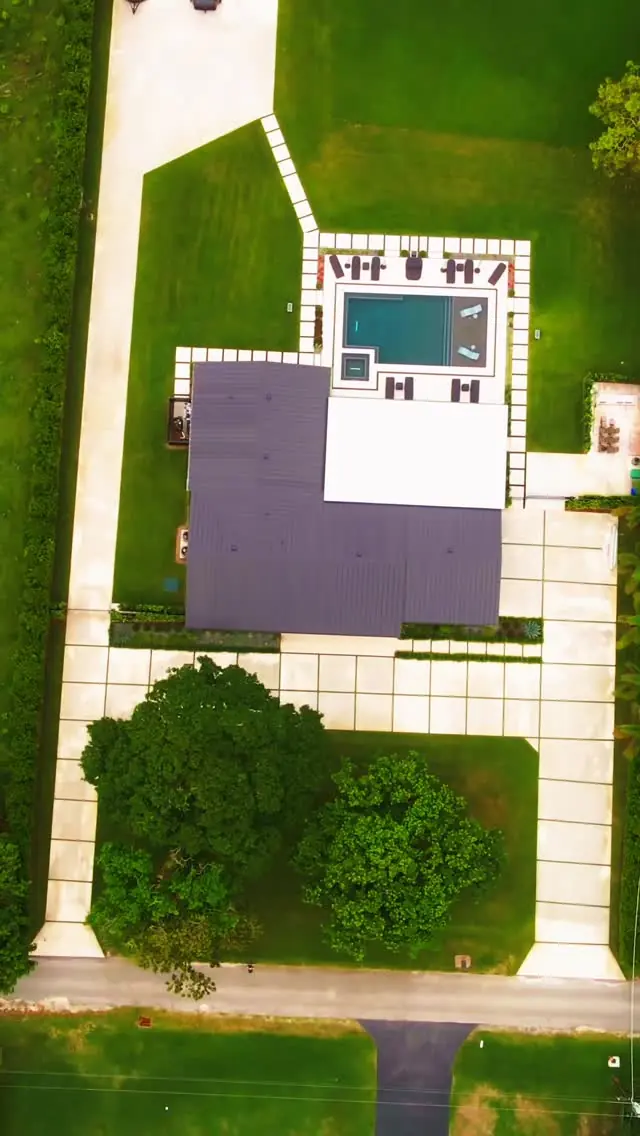
That’s why the question isn’t only whether a company can pour concrete or build a pergola. It’s who owns the sequence, and who answers when two trades disagree. Our Southwest Ranches backyard project shows what that looks like when the pool, deck, pergola and driveway are built as one.
Verify the license first
In Florida, contractors are licensed by the Department of Business and Professional Regulation (DBPR). You can look up any contractor for free on MyFloridaLicense.com using “Verify a License,” by name, business name or license number. When you do, check:
- Status. The license should be current and active.
- Certified or registered. Certified licenses begin with C and are valid statewide. Registered licenses begin with R and only allow work in the local jurisdictions where the contractor holds a certificate of competency. Make sure a registered license covers your city.
- License type. A general contractor license (CGC or RG) covers the broadest range of work. Electrical, plumbing, pool and roofing work have their own licenses.
- The business. DBPR advises searching both the business name and the individual qualifier to confirm the license actually qualifies the company you’re hiring.
Concrete Solutions Today LLC is a State of Florida Certified General Contractor, CGC1527850. You can look us up the same way.
Match the contractor to the scope
A license tells you a contractor may do the work. It doesn’t tell you they’ve done work like yours. Ask to see finished projects the company built itself, similar in scope and finish, ideally in your area. Real job-site photos, not stock images, are the minimum.
Local experience matters in Broward and Palm Beach. Every city has its own permit checklists, impervious limits, setbacks and right-of-way rules, and many communities add HOA approval on top. A contractor who already works in Weston, Parkland, Boca Raton or Wilton Manors knows what those offices ask for. Our Wilton Manors driveway permit guide shows how specific one city’s requirements can be.
Questions to ask before you sign
- Who prepares and pulls the permits, and who schedules and attends inspections?
- Who will be on site day to day, and who is my point of contact?
- Which work do you do with your own crews, and which do you subcontract? Are those trades licensed?
- How will drainage, elevations and transitions between materials be handled?
- What exactly is included, and what is excluded?
- How are changes priced and approved?
- How are payments tied to completed stages of work?
- Can I see your certificates of insurance?
Good contractors are glad to answer these in writing. Vague answers now usually become disagreements later.
What belongs in the contract
The written scope should name the materials, finishes, dimensions and who supplies what, along with the payment schedule and how changes are handled. Florida law adds a few specifics for residential work:
- Section 489.1425, Florida Statutes, requires residential contracts over $2,500 in labor and materials to include a written notice about the Florida Homeowners’ Construction Recovery Fund.
- Under Florida’s construction lien law (Chapter 713), a Notice of Commencement is required on most permitted improvements. It is recorded with the county and posted at the job site before the first inspection.
- Subcontractors and suppliers may have lien rights on your property, so ask how lien releases will be handled as you make payments.
This is general information, not legal advice. For questions about a specific contract, talk to a Florida construction attorney.
Compare bids line by line
Two totals mean nothing until the scopes match. A lower number with fewer line items is usually a smaller scope, not a better price. Put the bids side by side and check demolition, base preparation, drainage, permits, engineering, finishes, cleanup and what happens to your landscaping. Ask each contractor to price the same scope, then compare.
Red flags
- Pressure to skip permits, or a suggestion that you pull an owner-builder permit for work the contractor will do. As an owner-builder, you take on the responsibility for the work and the inspections yourself.
- A license that doesn’t match the business name, has lapsed, or doesn’t cover your city.
- No written scope, schedule or payment terms.
- Deflecting questions about local permit or HOA requirements.
- No finished work of their own to show.
- A large payment demanded up front with nothing tied to progress.
Where Concrete Solutions Today fits
We’re a design-led general contractor based in Southwest Ranches, working across Broward and Palm Beach counties. Our focus is the exterior: modern concrete driveways, concrete and artificial grass, pool decks, custom pools, pavers and porcelain, pergolas and turf, planned as one project. We also handle remodeling and additions.
We work in Southwest Ranches, Davie, Weston, Plantation, Cooper City, Pembroke Pines, Coral Springs, Parkland, Fort Lauderdale, Boca Raton and nearby cities. Hold us to the same checklist: look up our license, ask to see our work, and read our scope line by line. You can browse finished projects in our gallery.
Request a free design consultation and send us your property survey to get started.
Frequently asked questions
How do I check a contractor’s license in Florida?
Use the free “Verify a License” search on MyFloridaLicense.com, run by the Florida DBPR. Search by name, business name or license number, and confirm the license is current, active and qualifies the business you are hiring.
What is the difference between a certified and a registered contractor?
A certified contractor (license number starting with C) can work anywhere in Florida. A registered contractor (starting with R) can only work in the local jurisdictions where they hold a certificate of competency.
Do I need a general contractor for a driveway or pool deck?
For a single-trade job, a licensed specialty contractor may be enough. When several trades and materials meet, such as a driveway, pool deck, turf and pergola, a general contractor who owns the sequence and the permits usually makes the project simpler.
Who should pull the permit?
Normally the licensed contractor doing the work. Be cautious if a contractor asks you to pull an owner-builder permit for their work, because the owner-builder takes on responsibility for the work and the inspections.
What should a residential construction contract in Florida include?
A detailed scope, materials and finishes, a payment schedule tied to progress, how changes are handled, and for residential contracts over $2,500, the Florida Homeowners’ Construction Recovery Fund notice required by section 489.1425, Florida Statutes.