
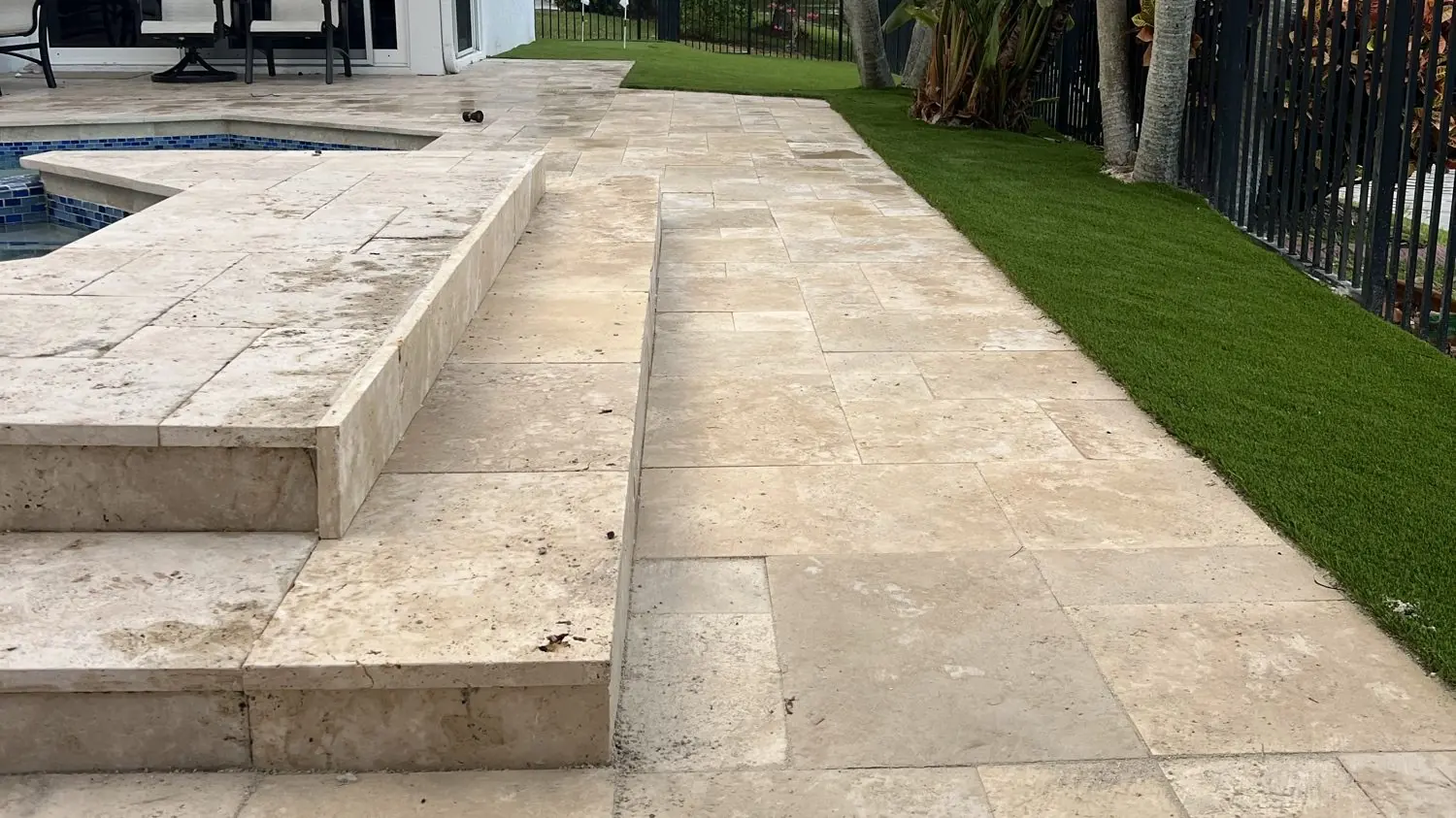
What a South Florida pool deck has to handle
A pool deck here works harder than almost anywhere else in the country. It sits in strong sun most of the year, gets soaked by summer storms, takes splash-out with pool chemicals every day, and on coastal and waterfront lots it lives with salt air. The surface is also barefoot territory, so how it feels under your feet and how slippery it gets when wet matter as much as how it looks.
Every material below can work well. The differences show up in surface heat, traction, upkeep, how repairs are handled, and how the deck reads with the architecture of the house.
Poured concrete
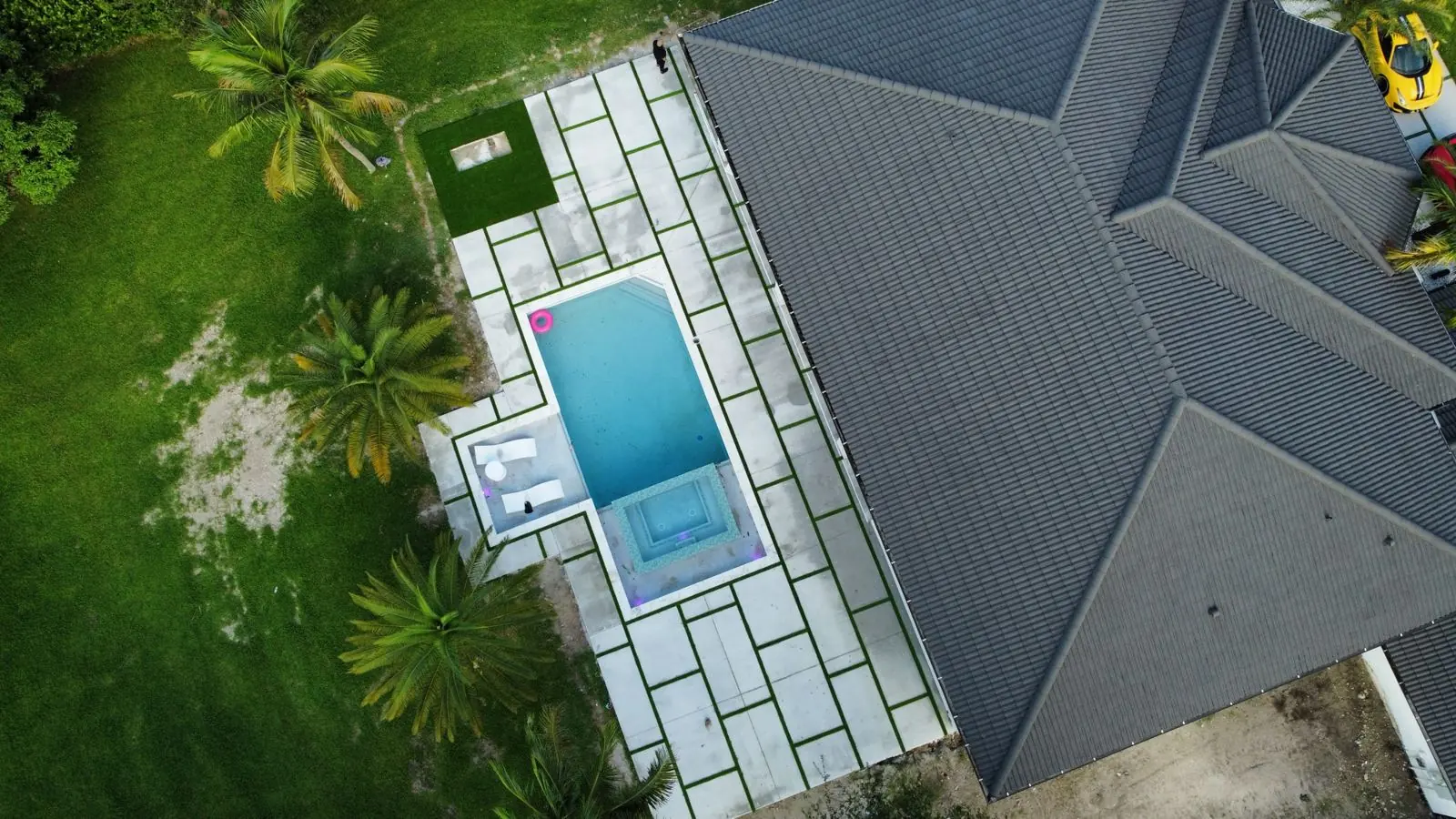
Poured concrete is the cleanest way to get a modern, minimal deck: large panels, crisp edges, and joints that can line up with the pool and the house. It can be finished in many textures and colors, and it pairs well with turf joints for a softer look.
What to plan for: the finish and color drive comfort. Lighter colors and textured finishes stay cooler and offer better grip than dark or very smooth surfaces. Concrete needs control joints placed on purpose so cracking follows the design, and repairs are harder to make invisible than replacing a single paver or tile. Sealing on a schedule helps with stains and chemical splash-out.
Travertine and natural stone
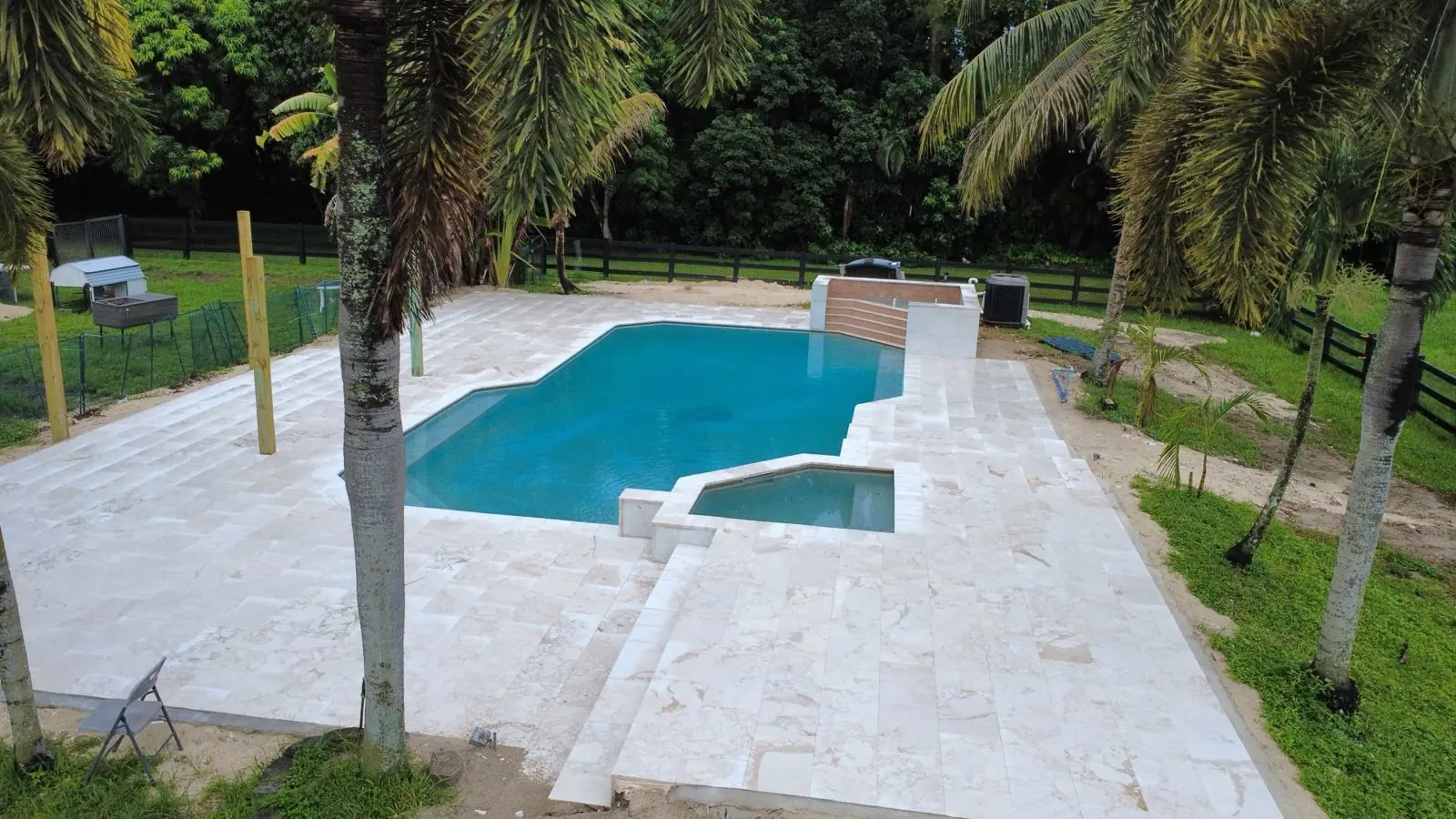
Travertine has been a South Florida favorite for a long time because it looks warm and natural, and lighter tones tend to stay comfortable underfoot in the sun. Tumbled or textured finishes give good traction when wet.
What to plan for: natural stone is porous and varies piece to piece. It benefits from sealing, and it can show wear, pitting or staining over time, especially near salt systems and around the coping. Because it comes in quarried lots, order enough for future repairs from the same batch.
Porcelain pavers
Outdoor-rated porcelain pavers give a refined, architectural look with very consistent color and size. Large formats suit contemporary homes, and stone-look and wood-look options make it easier to match interior flooring for an indoor-outdoor flow.
What to plan for: choose a product rated for outdoor and pool use with a textured, slip-resistant surface, not an interior tile. Porcelain absorbs very little water, which helps with stains, but it depends on a well-built base and correct installation, either on a drained, compacted base or bonded to a slab. Darker colors will feel hotter in direct sun.
Concrete pavers and shellstone-look pavers
Concrete pavers are a practical, flexible choice. They come in a wide range of shapes and colors, including travertine and shellstone looks, and individual pieces can be lifted and reset if something underneath needs work or a section settles.
What to plan for: pavers rely on edge restraint, a properly compacted base and joint sand to stay tight. Weeds, ants and joint sand loss are the usual maintenance items, and sealing and re-sanding every few years keeps them looking finished. Our concrete vs. pavers comparison goes deeper into base construction, repair and long-term cost.
Concrete with artificial turf
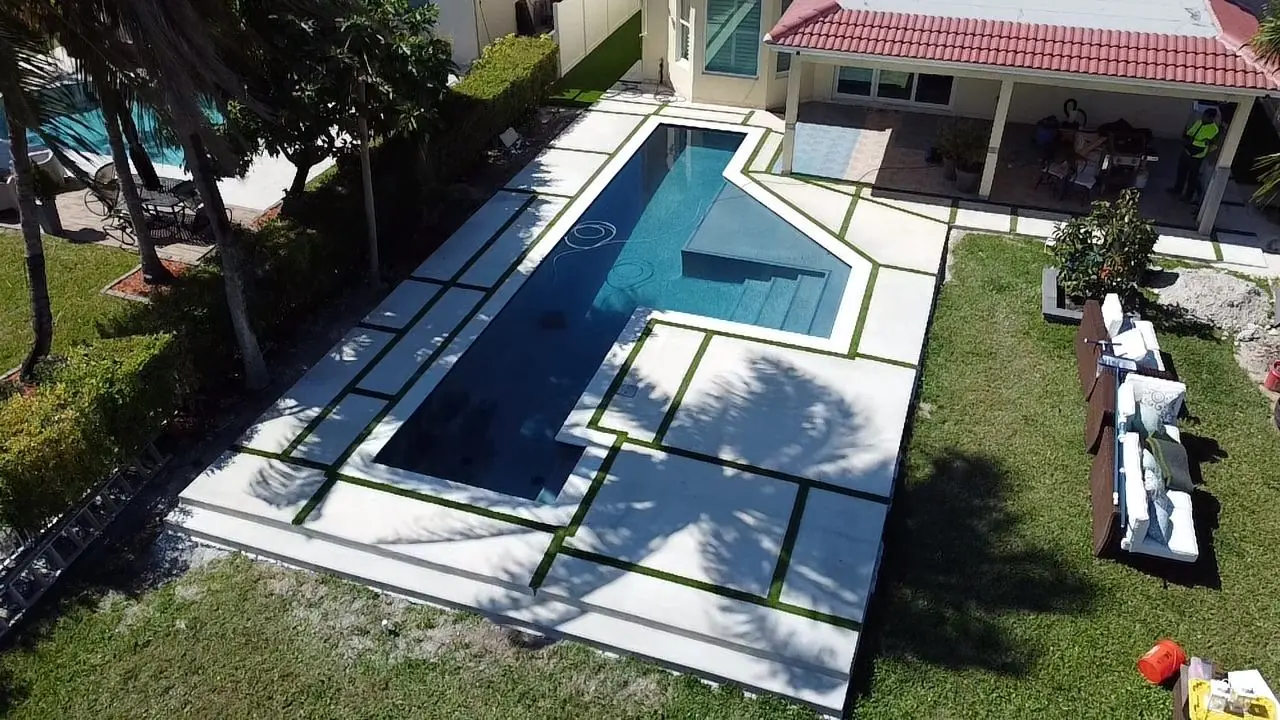
Large concrete panels separated by turf joints or turf areas are one of the most requested modern looks in Broward and Palm Beach. The turf breaks up the hard surface, adds green with no mowing or watering, and gives the deck a resort feel.
What to plan for: the turf needs its own drained base set level with the concrete, and the layout should be drawn before anything is poured. Turf can feel warm in direct sun, so many owners keep it to joints and lounge areas rather than the main walking path. See our concrete rectangles and artificial grass guide for how the design is built.
Resurfacing an existing deck
If the existing slab is sound, resurfacing can change the look without a full tear-out. A new textured or tile-pattern finish can refresh an older pool deck, often for less disruption than replacement. It is not the right answer for a deck with major settlement, drainage problems or widespread cracking, and we look at the slab before recommending it. See concrete resurfacing.
Questions that usually decide it
- Sun and color. Which parts of the deck get full afternoon sun? Light colors and textured finishes matter most there.
- Traction. Who uses the pool? Kids, older family members and guests are the reason to choose a slip-resistant finish over the smoothest look.
- Salt and chemicals. Saltwater pools and coastal lots favor materials and sealers chosen for that exposure.
- Style. Does the house call for clean modern panels, warm stone, or a porcelain floor that continues from inside?
- Repairs. Would you rather lift and reset a few pieces, or have a continuous surface?
- Drainage and permits. How the deck slopes to drains, how it counts toward your lot’s impervious limit, and what your city and HOA require can narrow the options before style does.
Our city guides for Boca Raton, Parkland, Weston, Coral Springs and Fort Lauderdale explain local limits, and the free lot simulator shows how much hard surface your lot can take.
Plan the deck with the rest of the backyard
The deck is where the pool, the house, the pergola or cabana, the lawn and the equipment area all meet, so it should be designed with them, not after them. Elevations, drains and transitions between materials are much easier to get right when one team plans and builds the whole area. Our pool deck remodel planning guide covers the decisions to make before work starts.
Concrete Solutions Today is a State of Florida Certified General Contractor (CGC1527850) based in Southwest Ranches. We design and build pool decks, pavers and porcelain, concrete and artificial grass, custom pools and pergolas for homes in Boca Raton, Parkland, Weston, Southwest Ranches, Coral Springs, Fort Lauderdale and nearby cities. Browse finished decks in our gallery.
Request a free design consultation and send us your property survey to get started.
Frequently asked questions
What is the coolest pool deck material for South Florida?
Lighter colors and textured finishes stay the most comfortable in direct sun, whatever the material. Light travertine, light porcelain and light-colored concrete finishes are common choices. Dark surfaces and turf in full sun feel noticeably warmer.
Is travertine or porcelain better for a pool deck?
Both work well. Travertine looks natural and stays comfortable when light in color, but it is porous and benefits from sealing. Outdoor porcelain is very consistent and absorbs little water, but it needs a slip-resistant pool-rated product and careful installation.
Are pavers or poured concrete better around a pool?
Pavers can be lifted and reset for repairs and come in many styles. Poured concrete gives a cleaner, more modern look with fewer joints. The right choice depends on the design, the base and how you want repairs handled.
Can artificial turf go next to a pool?
Yes, when it is built on its own drained base and set level with the deck. Many homeowners use turf in joints and lounge areas and keep the main walking path on concrete, stone or porcelain.
Do I need a permit to replace a pool deck?
Many South Florida cities require a permit for a new or replaced pool deck, and HOAs often require approval as well. Requirements vary by city, so we confirm them for your address before design is final.